Français
 Nederlands
 Deutsch
 Español


Solitaire Rings
One stone, one band, nothing in the way, in moissanite and sterling silver.
Why one stone is enough
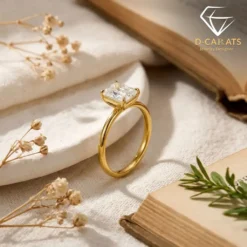
A solitaire puts a single stone on a band and lets it do all the work. It is the most classic engagement ring shape and the easiest to wear, since it goes with everything and never looks dated. The simplicity is also a test. With no halo to hide behind, the cut of the stone matters more than anything else.
Choosing the shape
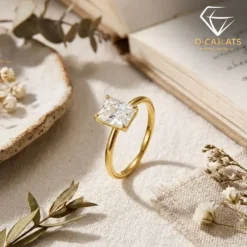
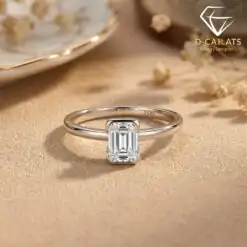
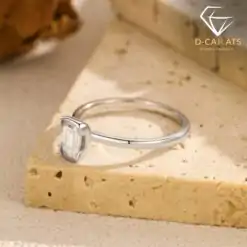
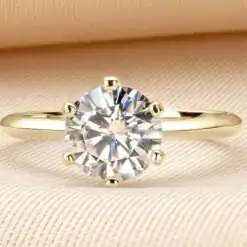
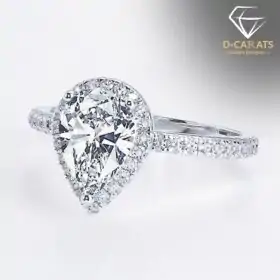
Round cuts return the most light and suit every hand. The oval and the marquise stretch along the finger, the pear adds a soft point, the cushion looks romantic and slightly vintage. The emerald cut, with its long step facets, gives a calm, mirror-like shine, and one of our rings sets it east-west, lying across the finger. Our solitaires go from half a carat to three.
Prongs, bezel and band
Four prongs show the most stone, six hold it more securely. A bezel setting wraps the stone in a thin rim of metal, which protects it and suits active hands. The band itself can be plain for a clean look, or lined with small moissanite for more sparkle along the finger. A slim band makes the center stone look bigger.
Stones beyond white
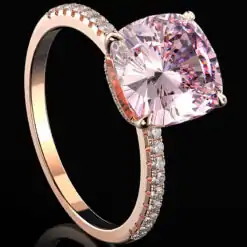
A solitaire does not have to be white. A pink stone on a rose gold plated band, a blue iolite, or a ruby-red stone in a yellow gold plated bezel give the same pure shape with a personal touch. Whatever the stone, keep it clean with warm water and a soft brush, because a thin film of cream is enough to dull a solitaire.