
 Français
 Nederlands
 Deutsch
 Español


Cubic Zirconia Rings
Big color and big sparkle for a gentle price, on 925 silver.
A stone made in Moscow
Cubic zirconia has existed in nature only as microscopic grains. The stone we know was first grown in large crystals in the early 1970s at the Lebedev Physical Institute in Moscow, known by its Russian initials FIAN. For years it was sold under the name fianite. The method, called skull melting, heats the powder so hot that no crucible could hold it, so the outer crust of the powder itself serves as the container.
What cubic zirconia is, and is not
Cubic zirconia is not a diamond and not a lab-grown version of any natural gem. It is its own material, zirconium oxide, cut to look like a diamond or dyed to look like a ruby or a sapphire. It sparkles brightly when new and costs very little, which makes it ideal for a bold cocktail ring you want to wear to a party without worrying. We always name it clearly on the product page.
Our cubic zirconia rings
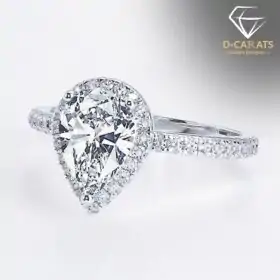
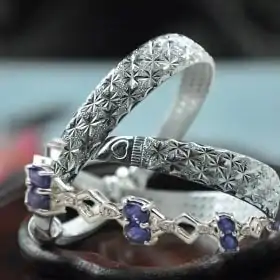
Here you will find oval cocktail rings in ruby red and sapphire blue, each surrounded by a double halo of white stones in the Art Deco spirit, an oval ring in yellow gold plated silver, and an oval simulated diamond with a hidden halo. These designs would cost thousands in precious stones. In cubic zirconia on 925 silver they stay within reach.
Keeping the shine
Cubic zirconia is softer than moissanite, around 8 on the Mohs scale, and it can collect a film of cream and soap that dulls its sparkle. Clean it regularly with warm soapy water and a soft brush, and dry it with a lint-free cloth. Store it apart from harder stones, which could scratch it, and take it off for sport and housework.


